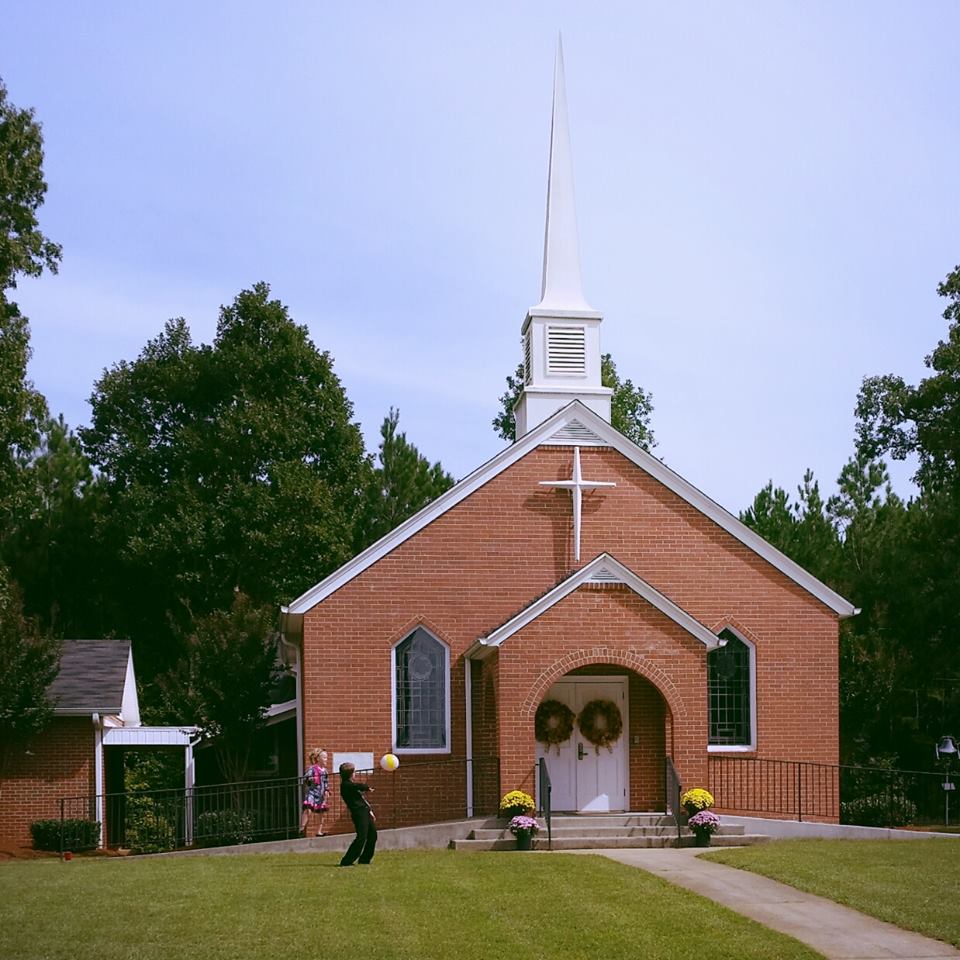
Homecoming Thoughts

Gray Rock UMCI sat in the pew and watched the Youth Choir of Gray Rock UMC stand in front of their microphones and sing a praise song immediately before I was to get up and preach. I listened to the beautiful harmonies they made. I watched as the young woman directing them smiled as she led and I was transported back almost twenty years…

The Gray Rock Youth choir was singing for a Maundy Thursday service. The director I had just been watching was one of the singers and this group was being led by her mother – a second generation member of the church who was married to a fifth generation member of the congregation. They had history. When the youth were singing in the 90’s, I was listening closely to the words – “We are one in the Spirit, we are one in the Lord…” and I was thinking about what I was going to do next.

Earlier in the week, the director and I had a little “clash” over when the youth should sing. I wanted it during communion. She wanted it before communion. She wasn’t mean about it at all…just firm. But it was also a clash that made me feel so disconnected from this group of worshipers that I decided then and there that I would not partake of communion with them again. I would pray for the elements. I would serve them. But I was NOT going to share with them. We just did not see things the same way and I knew that this was the only way I had of separating myself from them. Perhaps, just perhaps, if I could get the director to see things my way, it would be different. But this was a battle I would not win.

And I thank God for that.

I listened to them sing those words and my heart was strangely warmed. Not heartburn. Not conversion. But it was warmed with conviction. I heard Jesus saying to me: “I love these people just the way that they are. Who do you think you are to find yourself better than them…righter than them…separated from them. I love them and I love you.”

When the song was over, I walked to the communion table, said a prayer of Great Thanksgiving and served the youth choir director. With tears in my eyes, I asked her to serve me. She did.

Even then, I didn’t know how profound a moment this was but over time it has taught me that there is probably a much greater concentration of grace in the pews of any church than I will ever find behind the pulpit on any given day.

When I found myself back in the moment of 2014 and watched the new director smiling as her daughter sat beside her and a cousin (or two) sang in the choir I was overwhelmed with a feeling of connection. Not my own connection, mind you, but the connection that these generations of people could count on to share the gospel, build the faith, and be the Kingdom. I was teary again when I walked into the pulpit. I was overwhelmed with happiness for them at the moment but I was also filled with quite a bit of jealousy.

I am an itinerant United Methodist Elder. I live in a home provided by a church congregation and I serve congregations at the will and pleasure of my Bishop. I actually have very little to complain about in this regard. The congregations that I have served have been loving and accepting of me and my family and they have challenged me to grow in my faith and in my calling. I love the life of a United Methodist pastor.

However, every once in a while, my heart longs for something that it has trouble naming.

I found the name for this on, October 28, as I stood among the people of Gray Rock UMC and proclaimed God’s word for their 160th Homecoming Celebration.

I served Gray Rock (along with Bethel UMC) while I was a student at Duke Divinity School. Churches that have the courage to accept a student pastor into their midst have a special place in God’s Kingdom. Student pastors are constantly being shaped and changed by the theological education that they are undertaking. I was NOT an exception to the rule. From the story above I think I could make a case for becoming the 1990’s poster child! There were weeks when everything that I learned in school that week came regurgitating out of my mouth in something that I would call a sermon. And my leadership decisions…well, we will let the one above speak for itself.

The word I found as I walked into that pulpit for the first time in twenty years was connection. They had it each and every week when they gathered. I did not. I was the outsider, sent by the Bishop, connected by an appointment but not connected by generation after generation.

However, as I preached about Paul’s love for the Church in Philippi that morning and remembered, with no hint of sarcasm, the true love that I have for this little church in Kittrell, North Carolina, and as I looked at the proud – yes, proud eyes of the congregation watching this preacher who had continued on in the journey for twenty years, I was suddenly more than just an itinerant preacher. I was part of their family. I was connected.

And I thank God for that. I thank God for that.

It was a beautiful day…conversations after that were wonderful. The food was even better than I remembered. The walk through the grave yard reminiscing about people who had gone on to their reward was bittersweet.

I stood for a moment by myself at the grace of the last person I helped bury at Gray Rock. I thought of the family she left behind. I thought of the grace with which she faced her death. I thought of the grace I saw being lived out in her husband, his new wife and all their children.

My God…was I blessed to have been a part of that church twenty years ago and even more blessed to have been a part of it this year.

Gray Rock UMC…I thank God for you everyday in my prayers! You taught me grace. You taught me love. You taught me!

Suspenders

suspendersSometime in my early teen years, I just had to have a pair of rainbow colored suspenders. I begged my parents for this article of clothing until someone finally broke down and got them.

Did I need them because I didn’t like to wear belts? No. Did I need them to keep my pants up? Not really…I usually wore a belt anyway. Why did I need them, then?

Because Mork from Ork wore them.

For those who are not old enough to remember or for the select few who didn’t watch television in the late seventies, Mork and Mindy was a television show about an alien from the planet Ork who somehow ended up living in the suburbs of Denver. And unless Mork had on clothing from his native planet, he almost always wore rainbow colored suspenders. And just in case you haven’t figured it out yet, Mork was played by Robin Williams, an actor who recently lost a battle with depression and ended his life. (As a side note, I try to avoid using the word suicide. I don’t like it for many reasons but you can read more about that on my blog if you really want to do so.)

Robin Williams was one of my earliest role models and heroes. He made people laugh and I found that making people laugh was not only fun to do, it gave an otherwise short and awkward teenager a way to be noticed amongst his peers and even by some adults. For several years I had the very unrealistic dream of becoming a stand-up comic.

That dream led me to do both community and school theater. That dream gave me the drive to actually be employed professionally as an actor – ONCE. That dream of standing in front of people, telling stories and jokes and hearing them respond with laughter is one that kept me going through much of my high school years. Even after I retired the suspenders (but didn’t throw them away, mind you) and had quit idolizing Robin Williams for some other comic I can’t even remember now, I still held on to the dream of making a livelihood out of comedy.

But a lot of life happened between that early dream and where I am today. I consider myself fortunate, very fortunate indeed that at some point in time I realized that there was a different plan for my life. Although I cannot paint a picture of the long road I took to get there in this article, I can at least say with a great deal of certainty that I ended up where I was supposed to be headed all along – in pastoral ministry.

In some ways, I still get to live part of that early dream – I stand up in front up people on a regular basis and I get to tell stories. However, they often are not funny ones and even when they are funny I hope that they point to something else. I hope they point to the God who loves us all enough to send his Son to die for us.

I get a little sad each and every time I hear of someone losing a battle with depression that ends in death. As far as I am concerned, the disease rids people of their ability to make good and rational choices. Instead, they just want the hopelessness to end and can really only see one way out of that hopelessness – to be present with God.

We worship an incredible and awesome Savior. Jesus was, is and always will be part of the Trinity known as God. When Jesus walked among us, he was fully human and fully divine. His death would not have been a sacrifice on his part if he did not have the power to prevent it. Yet even with the power to prevent his own life from being taken, Jesus chose to give it up. Why? So that we could have life that is ever-lasting – both now and after our own deaths.

Sometimes, I am afraid, we concentrate so much on the gift of “life after death” that is a promise of the sacrifice of Jesus that we forget about ever-lasting life that is available to us now. Please don’t jump to conclusions here…I am not talking about people with mental illness forgetting that promise, I am talking about perfectly normal and mentally healthy people forgetting it.

That, to me, is why it is so tragic when someone loses their life to a battle with mental illness. There are so many of us around who have life to spare, who drink from wells that never run dry, who walk on paths made smooth by the grace of God, who have hope beyond measure that we should be able to at least talk about mental illness in such a way that it would offer life and hope to others around us.

I am not offering any grand solution here. Now am I asking you to find some way to be in ministry with those who are mentally ill.

I am asking that we all take a moment and thank God for the life and hope that we have because of Jesus. And maybe in that thankfulness, we will be just a bit more cognizant of those around us who are struggling and we can show them a new way to hope…a different way to be close to God. One sacrificed his own life so that we could all have life abundant! In being thankful, we are in the position to help those who can’t be thankful because of mental illness.

I can’t say that this will work every time, but I won’t stop hoping that it does.

Nanu…Nanu.

The Valley of the Shadow of Death

Another thoughtful reflection on depression and mental illness.

A. G. VanBibber Reed's avatar

Tuesday evening, my heart broke twice.

First, it broke when I received the news that Pat, a beloved parishioner, had passed away.  Pat was a wonderful woman who will leave behind a legacy of riotous laughter and chaotic family gatherings. I’ve only known her for the past two years, and she’s been battling one health malady after another since then, but she always did so with a quick, acerbic wit and a smile.

I will never forget sitting in her hospital room after she suffered a stroke and watching her rib the doctors and nurses and orderlies and janitors alike. No one left her hospital room that wasn’t smiling and laughing. That was Pat. She was funny and she always made the most of whatever situation she was in, no matter how bad.

When I got home that evening I sat down to check Facebook before calling it a night…

View original post 832 more words

An End to Suicide

The game of life is hard to play
I’m gonna loose it anyway
The loosing card I’ll sometime lay
so this is all I have to say:

That suicide is painless
It brings on many changes
and I can take or leave it if I please.

“Theme to M.A.S.H. (Suicide is Painless)” by Robert Altman

     The television show M.A.S.H. was one of my favorite shows to watch from childhood into my young adult years. I still like to catch a re-run every now and then, truth be told.

     I did not learn or even know of words to the theme song for this show till my late teens and at the time I first heard them I didn’t think much about them. The lyrics were haunting, but I wasn’t one to get caught up in overly deep thought in those days. However, many things have happened since the mid 80’s to make me really question the whole idea of whether someone could “take or leave it if I please.”

     (Granted, the theme song is for a movie and tv show that deal with war – an arena that I have zero experience in. Yet I still wonder if the rules of life and death change that much in the face of war. I learned recently that the civilian rate of “taking one’s life” plummeted during WWI and WWII quite possibly because  many people saw things that helped them  that place a high value on living and dying. I don’t know for sure.)

     I do know that a close friend from high school lost her mother through this so-called “choice.” I saw the the profound difference it made in her life, especially in those moments when people huddled together to hush their talk about the method and means of her mother’s death.

     As a pastor, I have sat beside too many grieving family members who were trying to understand how someone could choose to end their life at their own hand. “Why?”  – which is always a big question – doesn’t even come close in those holy moments.

     As a son, I also watched what happened to a household as the cloud of depression settled into a home. It was dark, heavy and totally uncontrollable. No amount of joking, hilarity or humor could lift it. No success on the part of any child could get it to budge. It was as present as the bed I lay down on each night and prayed, “Now I lay me down to sleep. I pray the Lord my soul to keep.” And I must admit that there was more than one night I changed the end of the prayer to say, “If any should die before I wake, I pray the Lord their soul to take.”

     Although no one in my immediate family has succumbed to the final throes of this hideous disease of depression – it has been close.

     And now, this morning, after I’ve read of the “suicide” of Robin Williams – another television favorite – and have read countless tributes, prayers and poems about the brevity of life and the difference we make in living it, I have one small request.

     Can we please, please stop using that damned word “suicide?” Can we please bring an end to its use to describe the end of life for those who suffer from a sometimes fatal illness known as depression? God has given us incredible imagination and I truly believe that with the power of the Holy Spirit, we can do better than to stigmatize the death of someone who was ill.

Hope     The word itself – suicide – seems to bring with it that idea that people have a choice about what happens to them in that moment of their death. I can say, after seeing so many people struggle with the very real disease that depression is, I no longer believe that they can “take or leave it” if they please. There is something more going on that we don’t understand, but we certainly don’t have to stigmatize with a word that brings hushed whispers about “how” and “what method.” People who have hope can surely do better than this.

     We would not say that a parachutist who died during a jump died of stupidity for failing to properly check their equipment. We might think – but in most cases would not say – that someone drank themselves to death or smoked themselves shut in a coffin because of cirrhosis or cancer. If we do, we need to check another filter! Death is sometimes an accident. Death is sometimes the “final card played in the game of life.” Death is often the result of some disease of body or yes, we can even say it – disease of the mind!

     I am tired of the word and I do everything I can to avoid it.

     It makes someone seem weak.

     It makes someone seem less than intelligent.

     It makes someone seem faithless.

     It makes someone appear to be healthy enough to make informed decisions.

     Those who are without hope, one of the main symptoms of depression, are not weak, dumb,  or really capable of making clear choices. They are often very faith filled people. They are fighting the battle of their lives. They are wrestling with death.

     Sometimes they win.

     Sometimes the bastard of depression wins.

     But all the time, those of us who know hope in this world, need to be vigilant to the battles being fought by those that we know and love. We need to fight against this disease as well.

     And can we please, please consider ending the use of that stigmatic word?

     It does nothing for the memory of a fellow human being who got struck down with a disease none of us would want.

If you really want to enter into the battle, can I point you to a great organization? They work on preventing this outcome of this disease and they are great at the battle. Check them out at afsp.org or watch for a local Out of the Darkness “walk” in your community. (Yes, I know they use THE word in their organizational title, but they do great work and I count us a fortunate to have them.)

Peace!

On Children at the Border

CrisisAtTheBorder
Https://lirs.org

Yesterday, I had the privilege to listen to Krista Tippett, host of NPR’s On Being, interview the (self-described “morose”) author, television and print journalist, Richard Rodriguez. Their conversation covered a lot of ground but part of it covered our current immigration crisis. Rodriguez sees this “problem” with very different eyes. The problem is here  and not in the scores of people who are making their way to our borders. The land of opportunity has so many people in it who feel the need to escape this terrific country that they fuel a drug industry that in turns allows thugs to take over countries to our south and send people – especially children – looking for a better life. Where do they look? The land of opportunity, of course.

I think that is a fascinating way of looking at it. Its a tragic comedy in many ways and one in which Rodriguez also pointed out was being played out with the voice of the Church being strangely silent.

That silence troubled me most of the day yesterday. I wondered why I hadn’t said more. I wondered why my church hadn’t said more and I even thought, “I think I know more people who would be upset that I was listening to a gay man suggest to the church that we could do more than there are people who are upset that we are expediting the return of children to places of death.”  I prayed a lot about it yesterday and today and the following came to me:

Father of all people everywhere, bless the new Americans who come in year by year from foreign lands. Help them in their loneliness to find friends, to get work and to be happy. May they feel that America is their country.

Help us, as people from all countries, to live together in this great world-nation. May we forget all difference in color and language and work for the future of our land, seeking to make it a home of freedom and brotherhood. Help us be more considerate of these immigrants, remembering that they may have more to give to American than we have. May we never speak disrespectfully of them, but treat them as our brothers and work with them for a greater America.

Now, I say these words “came” to me, but they are not my own. They are the words of Robert Bartlett found in the hymnal The New Hymnal for American Youth, copyrighted in 1930 by The Century Company.

I picked this hymnal up to look at it to see just how “dated” the hymns and prayers would be for our day and age. God laughed. I got the joke too. Granted the language is a bit more masculine than I would like but the words of that prayer are haunting. These children of God showing up on our borders are not a problem to be solved! They are our future brothers and sisters in faith and future patriots of this nation.

That’s apparently how it used to be so it makes me wonder about the terrific “conservative” voices I hear today saying we should send everyone back as quickly as possible: Just what are we conserving here? The American Dream or our slice of the pie.