
I invite you to join me in prayer. Would you pray for me even as I pray for us all?
Lord, it is not by might, it is not by power, and it most certainly is not by the cleverness of this human’s imagination that your word is read or proclaimed. But it is by your spirit. So may that spirit come now. May it rest upon each of us. May it work through all of us that we find ourselves in the presence of the Living Word, Christ Jesus our Lord.
Amen.
From Luke, chapter 19, verses 1 through 10.
Jesus entered Jericho and was passing through it. A man there named Zacchaeus. He was a chief tax collector and was rich. He was trying to see who Jesus was, but on account of the crowd, he could not because he was short in stature. So he ran ahead and climbed a sycamore tree to see him, because Jesus was going to pass that way.
When Jesus came to the place, he looked up and said to him, Zacchaeus, hurry and come down, for I must stay at your house today. So he hurried down and was happy to welcome him. All who saw it began to grumble and said, he’s gone to be the guest of a sinner. Zacchaeus stood there and said to the Lord, look, half my possessions, Lord, I will give to the poor. And if I have defrauded anyone of anything, I will pay back four times as much.
Then Jesus said to him, today, salvation has come to this house because he too is a son of Abraham. For the son of man came to seek out and to save the lost. This is the word of God for us, the people of God.
Thanks be to God indeed. You know, folks, over the past several weeks as we’ve gone through this Lenten series entitled Everything in Between, we’ve been wrestling a lot and digging deeper into a lot of parables. You know, we had the Good Samaritan, we had the parable of the barren fig tree. We had a parable about lost and found sheep and a shepherd risking everything. And the one week here in Lent that we didn’t have a parable, we had to deal with the family drama between Mary and Martha as they tried to figure out who was doing the better thing.
So to tell you the truth, I was looking forward to dealing with some very straightforward up front story from the life of Jesus this week. Something concrete. Jesus walking through a town, a tree, crowds, something without all that having to dig into parables and find all the meaning that’s in those parables. Something besides all the family drama that we’ve had to deal with.

And then, of course, we get to Zacchaeus.
Zacchaeus. The name Zacchaeus means righteous or pure. Did you know that righteous or pure is what this man is named? I mean, really, a Roman tax collector named that?
I mean, let’s be real. What’s the one word that is literally connected with tax collector in the gospel? With the conjunction and tax collectors and sinners. Yeah, tax collectors and sinners, exactly. And this one is named innocent and pure.
Not much of a break there. And as I studied a little deeper into this parable, I discovered that there were some interesting problems dealing with the original language of the parable. The original Greek is not so clear as to when it was that Zacchaeus started all this charitable giving that he was doing. Now, I don’t want to get. I don’t want to get lost in the weeds here or the thorns or go climbing up my own tree here and end up having nobody see or hear what I’ve got to say.
But suffice it to say, Zacchaeus could have been doing this giving and repaying for quite a while. Could have, just because of the words that are used in the original language. But what we do know for sure is that Zacchaeus went public with it after meeting Jesus. He declares what he’s doing and will do, and that changes a lot.
But still, as I was preparing for this week, I had to dig down into the roots of those words. Like that gardener dug down into that fig tree. I had to search like I was looking for a lost sheep in the wilderness. I began thinking, you know what? This might as well been a parable.
There was no break here.
And then, of course, there’s Jesus.
Jesus, there he goes and singles out this tax collector from the crowd. Zacchaeus, the man too short to see and too despised to be seen.
Zacchaeus, hiding in a sycamore tree, a man whose name was, to put it as mildly as you can, just a touch at odds with his reputation.
A man everyone knew was making money by taking money.
I tell you what, this series of everything in between really has drawn our eyes to the dichotomies that we can find in the world and even within scripture itself, dichotomies sometimes that we love to see. I mean, things like righteousness, we like that we can look at someone or something and say, that’s righteous. We know that’s good. It may even be trouble, but it’s good trouble, so we know that’s good. Righteousness, something we can look at and define.
And mercy, we like that, too, because we want to show mercy to those who deserve it, right? I mean, someone needs to deserve mercy. If you don’t believe me, just ask any old court judge. Or you can ask a young one, too. We’ve only got old ones in here today, though.
I think we like to keep our categories like righteousness and mercy separated.
But Jesus, well, Jesus doesn’t care all that much for our categories.
Jesus doesn’t see like we do. Jesus doesn’t even look in the same places we do for what needs to be seen in the story. Jesus sees: Zacchaeus, sees him up in the tree, hiding.
But Jesus sees him not as a tax collector, but as a human being. Jesus sees Zacchaeus as a child of Abraham.
And then Jesus just invites himself right into that person’s house, into the mess that is a tax collector’s life, into that space, that space that’s seemingly miles wide between righteousness and mercy. That’s where Jesus goes.
And that’s just it, isn’t it? That space between – that awkward, uncomfortable space where we don’t know what to do, the space where we’re not sure if we should be angry, judgmental, frustrated, or just compassionate.
That space where we must wrestle with verbs, when it comes to how we act.
A space where we must wrestle with names and labels and all those things. That space, that uncomfortable space where we must deal with, well, people.
We want it to be nice and easy one way or the other. Righteousness, mercy. Are they righteous? Do they deserve mercy?
And Jesus?
Well, Jesus fills that space.
Jesus doesn’t choose. Jesus just invites himself in. He stops at a tree and looks up and says, hey, you, I’m going to your house today.
Here’s Jesus looking where we don’t even want to look.
And in that moment, in that space filled with Jesus, something happens, something transformative. Zacchaeus, this person whose life was only known as the one who took from others, becomes and shows the whole community that everything is being made whole, everything will be made right.
Zacchaeus wants salvation, connection, community, not as a reward for being good, but as a gift freely given.
And Zacchaeus gets it. The community gets it. And that, my friends, is good news. Not just good news, but the good news. That’s the Gospel.
Jesus doesn’t just offer mercy to the undeserving and commend those who are righteous.
Jesus fills up the space in between.
Jesus fills up the space that is unfillable and even uncomfortable for us to go there.
Jesus brings together that which is broken, you know? Here, in just a few moments, Jesus will offer himself to you again in the act of taking apart of the broken body of Christ, we will be brought together in community.
It doesn’t seem to make sense, does it? In brokenness, there’s community.
But that’s what Jesus does. Jesus fills the spaces between those things that we have trouble filling.
Salvation, my friend, my siblings, salvation is offered to you today.
Come, come on down and let Jesus go to your house today. Amen. Amen.
As you leave this place, may you find God in every messy middle. May you know that the world is bigger than any two sides. May you trust that you are made in the image of God. Therefore, you contain multitudes. So may you move through the world with an open heart, with a curious mind, and with the confidence that you do not go alone.
God is with you in the mountains, in the valleys, and everywhere in between. Believe this good news and go in peace. Amen. Amen.
 Inside it are ceramic figures of a sheep, a donkey, an ox (not to any kind of scale, mind you, because I’ve seen an ox and they are scary big) as well as a camel that has been glued together more than once. An angel is in there too as well as three suspiciously Anglo looking “Wise Men from the East” and equally White looking shepherd, Joseph, Mary and baby Jesus. Don’t ever tell me that we don’t allow culture to influence our “pure biblical religion.” I will just ask you to show me your nativity set or a copy of the latest Christmas card you bought with a scene of Jesus’ birth on it.



 patient slept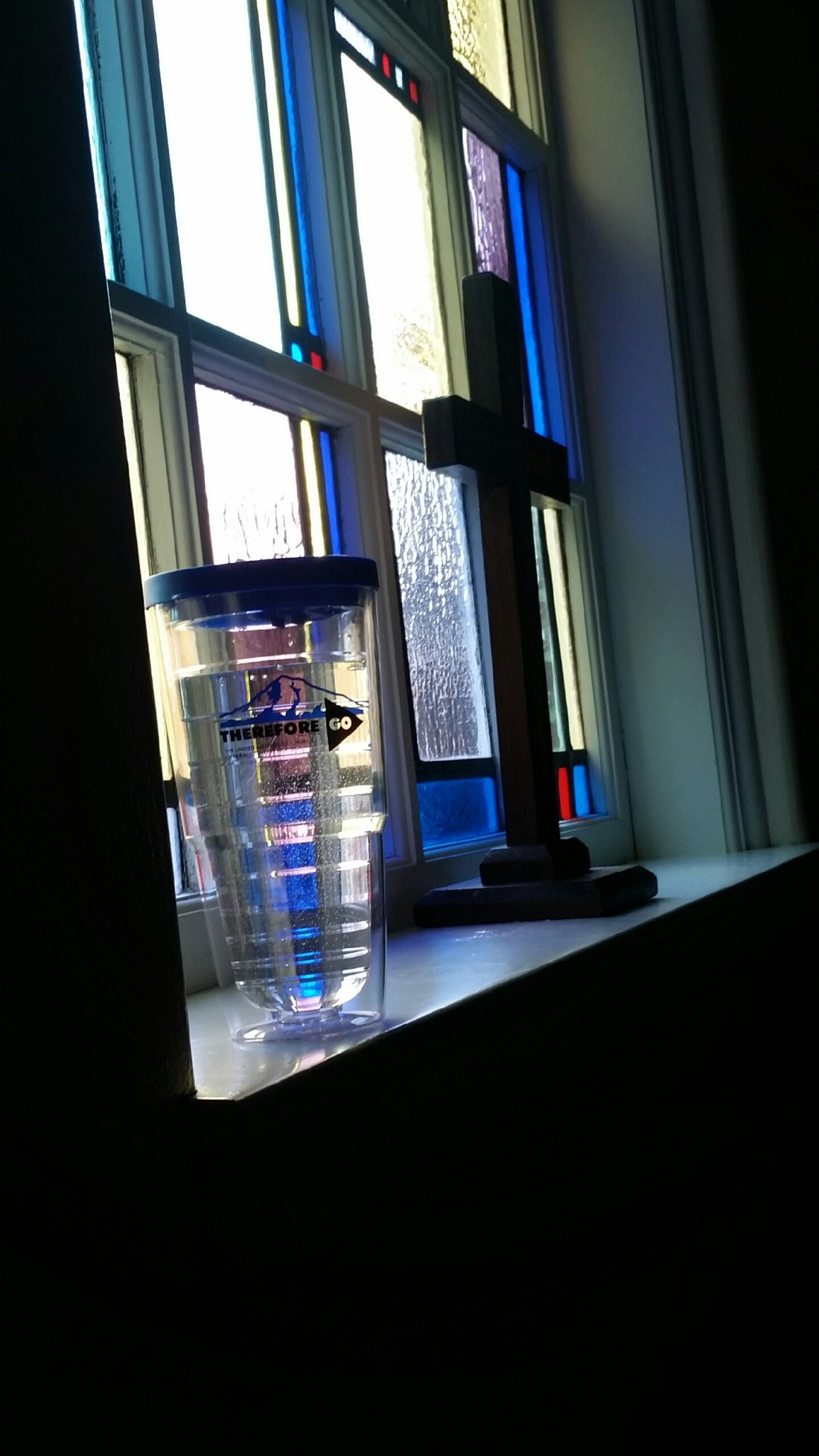
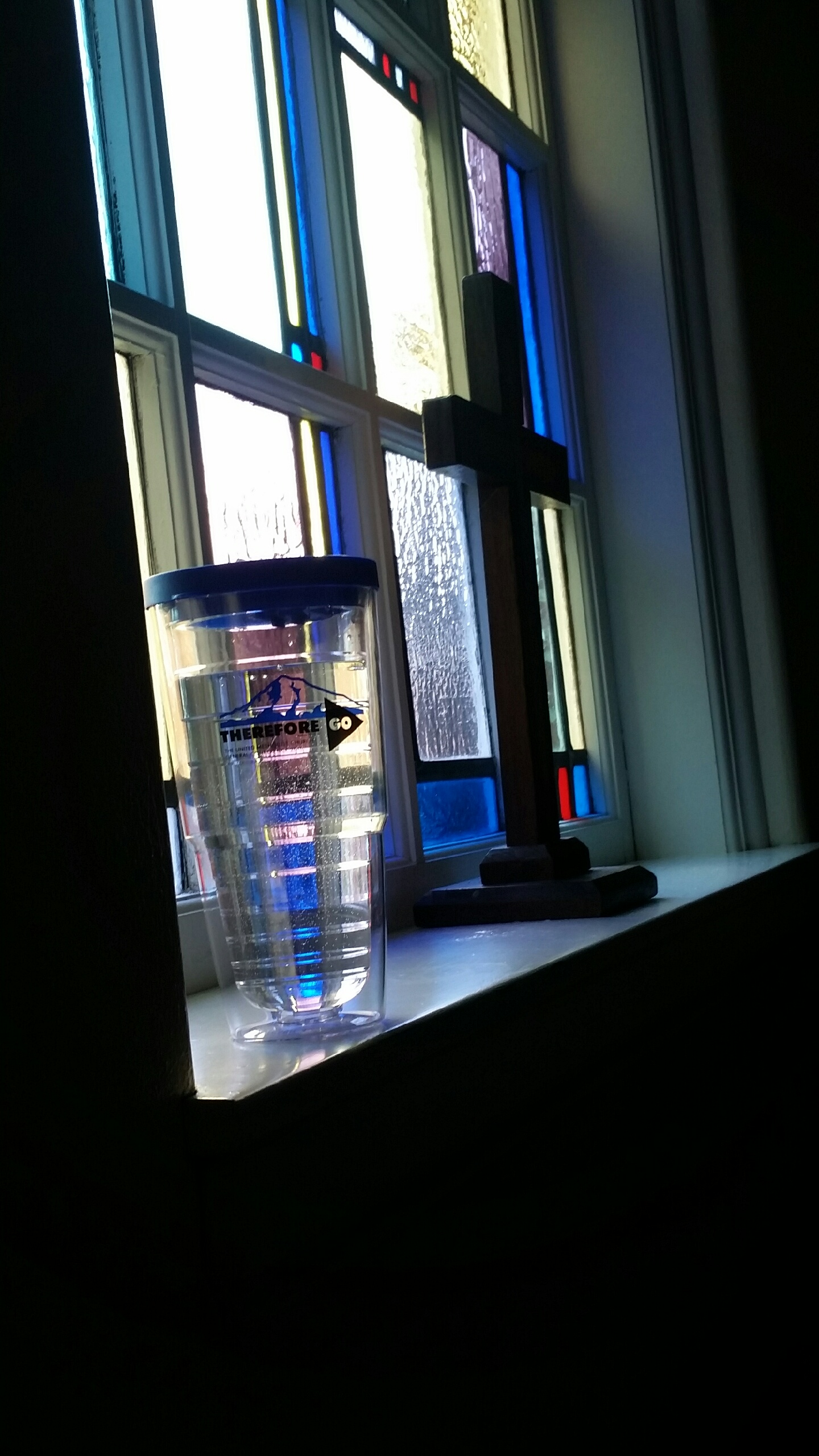 On Tuesday of this week, overwhelmed with preparations for Annual Conference, I set out for an afternoon walk around the campus of West Virginia Wesleyan College. A rain storm changed my plans, and I shortly found myself nestled in the quiet of the Meditation Chapel. For the first time all week, I allowed my mind to wander and settle into the familiar thoughts that seemed to consume me these days.
 Not Quite Home