shouting and silence – a sermon

There are several accounts in the New Testament of Jesus triumphal entry into Jerusalem. This morning. I read to you From Luke, chapter 19, verses 29 through 40, which differs in some ways from some of the other accounts and is the same in some ways. But please hear these words.

When Jesus had come near Bethphage in Bethany, at the place called the Mount of Olives, he sent two of his disciples saying, go into the village ahead of you, and as you enter it you will find tied there a colt that has never been ridden. Untie it and bring it here. If anyone asks you, why are you untying it? Just say, the Lord needs it. So those who were sent departed and found it just as he told them.

Sermon on April 13, 2025 – shouting and silence

As they were untying the colt, its owners asked them, why are you untying the colt? They said, the Lord needs it. Then they brought it to Jesus. And after throwing their cloaks on the colt, they set Jesus on it. As he rode along, people kept spreading their cloaks on the road.

Now, as he was approaching the path down from the Mount of Olives, the whole multitude of disciples began to praise God joyfully. With a loud Voice for all the deeds of power that they had seen, saying, blessed is the king who comes in the name of the Lord, Peace in heaven and glory in the highest heaven.

Some of the Pharisees in the crowd said to Jesus, teacher, order your disciples to stop.

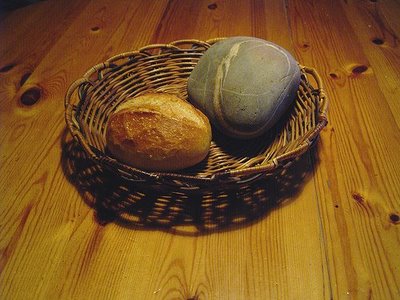
He answered, I tell you, if these were silent, the stones would shout out, this is the word of God for us, the people of God.

Mark Twain, the author, famously said one time, it’s not the parts of the Bible that I don’t understand that bother me. It’s the parts that I do understand that trouble me the most. Now, I’m not here to agree or disagree with what someone from a couple centuries might have said. However, I can say that I think living a life close to the one who makes the words of the Bible come alive often puts us in very uncomfortable places. Okay?

Living close to Jesus often puts us in uncomfortable places, even when we read the words about him. On this Palm Sunday, when we’re looking at everything between shouting and silence, I want to offer at least a couple of questions that easily, easily this passage leaves hanging around for us in life.

First of all, how did they know to shout praise and honor to a king?

How did they know? How did they know that this was what they were supposed to do? Was it the miracles? Was it the feeding of the five thousand and all the leftovers? Was it the people who were.

Who were blind that he made see again?

Was it the miracles? Was it those who had demons that were cast out from them?

Was it the miracles that made them shout? I don’t know if it was the miracles or not, but that question does kind of linger. How did they know to shout at this one, to throw down their cloaks for this colt to ride upon?

Was it the teaching, maybe the parables? The. The Good Samaritan, the lost sheep, the lost coin, the lost son, that stubborn fig tree who wouldn’t produce figs?

Was it the parables?

Was it the other teachings, the Sermon on the Mount or the Sermon on the level place, depending on where you read about it? Was it the big turnaround in that little guy named Zacchaeus?

Was it the teaching of the man named Jesus that made them shout and welcome a king? I mean, it was risky to do this kind of thing. You realize that, don’t you? I mean, standing where they were at that time, they were surrounded by an occupying army. An occupying kingdom watched over them, and they shouted out for their king.

This was risky stuff. It wasn’t as if they had to prove that they were citizens of this country and take risks or anything. They lived there, but they were in danger because they shouted out.

It was risky to welcome a king into the kind of life they were living. Risky indeed. So my first question is, how? How did they know to shout for the king?

And then there’s the second question. Maybe I was just in a kind of questioning mood this week or whatever. I don’t know. A question that I admit when you first hear it, sounds almost absurd as the first. But I’ve lived now in a world divided long enough.

I’ve lived in a world of haves and have nots. A world of people accepted and of people rejected. A world where some rule and some are the ruled. I’ve lived in this world long enough to come to my second question with a lot of honesty, and that’s this one. What if the Pharisees.

There was a few Pharisees, not all of them, but a few of them were told here. What if those few Pharisees who spoke out and said, everyone should be quieted here, what if they were actually right?

What if the crowd really did need to be silenced before something bad happened?

And yes, terrible things may have happened, may well have happened sometimes, you know, sometimes a crowd can bring out the worst of those who are supposed to be keeping order among people.

And those who are keeping order have to react or the crowd gets out of hand. In those days, it might have been with shields and spears and swords.

In our day, maybe it’s tear gas or water hoses or dogs or rubber bullets.

How can we be absolutely certain that that group of Pharisees were not just looking out for the good of the whole people, all their people? They weren’t just trying. They were just trying to protect folks.

What if they were right?

I’ve seen it happen.

I’ve had it happen.

I’ve said one thing in a sermon or message or in something I’ve written or said one thing in public.

Some in the crowd walk away from their church, and then I hear it.

You should have kept quiet, preacher.

You shouldn’t talk about that ever again. Pastor.

Don’t shout that out anymore.

There have been times in my life and in my ministry where I’ve heard the words of those who say, you better get it quieted down.

And I do. I do.

Because how do I know this telling me to be quiet might be right in between shouting and silence, in between those times when people feel compelled by the moment and the spirit to cry out, and the times when people are not certain enough to know if what is happening won’t just make matters somehow worse.

In between those two extremes is. Well, at least in this story we read today. In between those two extremes is the man God, Jesus riding on a colt. Yes, Jesus is silent.

He’s not crying out. And yes, Jesus is complicit. He doesn’t quiet the crowd either.

He just sits there and lets all the wrestling and the wrangling about what’s the right thing to do here and what’s the wrong thing to do. All the shouting and the silence making.

He just lets it all go on around him.

See, I had those questions about this passage, but there’s one thing I do not question at all, and that is why Jesus did not participate in the shouting or in the silencing.

That’s because Jesus knew the way of the cross was looming before him. He knew he was getting ready to die for shouters and silencers alike.

He knew Jesus. He knew he would bear the weight of all of their. Of all of my.

Of all of your struggles to know the right way to go. Is it shouting or is it silence?

My siblings. I’ve taken moments of silence as a pastor held back after hearing warnings that to speak might cause trouble.

I’ve also shouted for justice, more than my fair share, I think, and prayed for God’s presence to reign in a messy world often devoid of the love that is abundant in Jesus Christ, my Lord. And I know you wrestle with when to do these two things too, don’t you? Don’t you?

But every time, there’s only one thing I cling to.

I cling to the cross of Christ, where I know there is someone who knows both my passionate heart that must shout at times.

And where I’m also known as the one who can be silent, not really because of warnings or fear, but because I truly believe that that one on the cross in his silent state can sometimes shout louder than I’m ever able to shout if I just give him the chance.

How did they know?

And what if they were right?

Just two questions that kind of lived there in between shouting and silence.

But they also live with each who wonders.

There also lives with each who wonders a cross of redemption. A king filled with love. An abundance of grace for all of us. For all of us who shout.

For all of us who are silent. For all of us who struggle with everything in between.

Amen.

Pruning

The surgeon wielded a chainsaw
Strapped to his hip
a low hanging gun.
Vines of artificial hemp lifted and held fast to the surgeon
as spiked heels dug into the patient’s flesh.

The mechanical, maniacal roar of the scalpel
would cut and prune
in a effort to bring the patient
to a place of acceptance.
Acceptance by those who occupied the structures
made of relatives long ago murdered.
Correction brought with
sharpened teeth,
anointed bar,
and a single finger that gripped and pointed,
pointed and gripped.

From time to time a telling thump
could be heard as branch or limb
fell to sun hardened earth.

Could anyone hear the cries of the patient?
“You cut too deep!”
“You pruned too much!”

Sap spilled over the skin from open wounds
tears not unlike those shed
by a jilted lover
a shamed child.
Silent, yet filled with experiences unshared,
unknown by any other.

Over time the20160617_151424 patient slept
and attempted to recover from correction
as sunshine teased wounded limbs
to bring forth life again.
Water sprinkled wound and ground –
for life?
for death?
or just to say the healing ritual had be done?

Yet, the surgeon cut too deep.
The patient, now a victim,
silently
rots within.


Indeed this piece is about the loss of a tree in my  front yard. At the same time, this tree and its loss has become something of a metaphor to me of battles I am seeing fought all to often.

Take A Breath: Reflecting on Two Conferences (Guest Post)

The following post is by my daughter Erin Sears. Erin just completed her sophomore year at Marshall University. She is spending this week at the West Virginia Annual Conference both as a member of our General Conference delegation and a member of the communications team. Although the feelings and opinions are hers, I just happen to agree with them. She has a good message here.

Erin pauseOn Tuesday of this week, overwhelmed with preparations for Annual Conference, I set out for an afternoon walk around the campus of West Virginia Wesleyan College. A rain storm changed my plans, and I shortly found myself nestled in the quiet of the Meditation Chapel. For the first time all week, I allowed my mind to wander and settle into the familiar thoughts that seemed to consume me these days.
The thoughts began a year ago this week when the 2015 West Virginia Annual Conference elected me as a part of the delegation to General Conference. As I sat in the Meditation Chapel, I remembered those moments as if they were yesterday. I had been filled with awe at first because the people of West Virginia had affirmed the calling I felt from God last year at Annual Conference. However, the awe was tainted ever so slightly with fear. I wondered if I would be able to handle the enormous responsibility of being a delegate to General Conference.

The emotions of last year’s Annual Conference faded away.

My mind jumped to this past January, when I held the Advance Daily Christian Advocate, the workbook for General Conference, in my hands for the first time. I was oddly giddy for a college student who had just received an additional thousand-page reading assignment for the spring semester.

The work of General Conference seemed real for the first time. It was not just talking anymore. That first night I spent hours skimming through the various petitions and resolutions. My excitement faded, and anxiety crept back into place, again. The deadline that once seemed so far off started rapidly approaching.

As I digested petitions and resolutions, I began to worry I lacked all the knowledge I needed to make the right decisions for the global church. I felt backbreaking pressure about the importance of each decision.

The anxiety and pressure remained with me when I arrived in Portland, Ore., for General Conference. The time was now for the United Methodist Church to show its true self. Each decision we the delegates made could define us, the church.

My mind raced through the events that unfolded over the course of General Conference. I was so overwhelmed by emotions that I did not know what I felt. Each day was an emotional rollercoaster. One moment I experienced pure joy. The next, devastating sadness.

Fast forward to this week.

I could not focus on my emotions anymore. Instead, my mind turned toward the decisions that the delegation was preparing to report at Annual Conference. A long list scrolled through my mind – the bishops’ proposal, episcopal tenure, Imagine Abundant Health, withdrawal from the Religious Coalition for Reproductive Choice – and anxiety overtook my confused emotions. I wondered how the Annual Conference would handle the news of all the decisions from General Conference and how they would see me afterward.

Would the Annual Conference, still see me as a young lady called by God?

As I wondered, I looked around the Meditation Chapel. My eyes drifted towards the stained glass window beside my seat. I was taken back by the sight in front of me. I had placed my full water bottle in window sill when I had walked into the room. Etched across the tumbler was the General Conference logo “Therefore Go.” The logo pointed directly to the cross.

Then I realized that I must go and set aside my anxiety and be filled with the living water Christ offers.

That living water began to flow through me as glimmers of hope from General Conference emerged in my mind.

After one intense session, I walked into the hallway on the brink of tears. Someone gently ushered me toward Bishop Larry Goodpaster, one of the several bishops offering prayer outside the plenary hall in the Oregon Convention Center. As Bishop Goodpaster poured out a prayer, I felt God’s presence enfolding me and filling me with love and hope.

Another glimmer of hope: During legislative committee, my group spent time seeking to understand one another and the various contexts of our ministries. The dynamic of our conversations about petitions changed because of this process. Although we did not all agree, we worked respectfully with one another and left continuing to develop relationships with one another in spite of our division.

Yet another glimmer of hope: One morning, I met a fellow delegate while in line at the coffee shop inside the convention center. As we worked our way up to the front of the line, we shared a little bit about ourselves. He offered up encouragement that I needed to hear that morning and graciously bought my coffee.

Even in the mess of emotions of General Conference, God kept showing up like a breath of fresh air.

However, my anxiety had covered up those movements of the Spirit. I allowed something other than Christ to consume me. When I laid that down at the cross, I was refilled with something greater and more satisfying than that which consumed me – the living water of Christ.

May it be so with us.


On Unity


Do the actions of a few United Methodists threaten the entire denomination?


(A note to my readers: I have recently been engaging in quite a bit of debate with another United Methodist brother and blogger, Joel Watts, at unsettledchristianity.com over many of the events taking place in the UMC. After a protracted conversation over our first posts carried out on Facebook, we agreed to each write a post on “unity” and what that entails. I often say to Joel that I am not the theologian that he is. I am a pastor first and my theology grows from that work as a pastor. Like I say in the introduction to my blog, “Grace leads and I stumble along.”)


We can read about it in both national news and denominational resources. The United Methodist Church is struggling in the midst of learning how to be in ministry with people who are already in our fellowship. I refuse to say that we are struggling with the issues surrounding LGBTQ people because in my heart that reduces people to an issue. People are never an issue. People are children of God. As a church that affirms the sacred value of all persons, we recognize LGBTQ Christians as our brothers and sisters in Christ.

At the very same time, during a period when our denomination prepares for our quadrennial global gathering to work
on church doctrine and polity (re-write our Book of Discipline), there are events taking place among our churches, and by our clergy and bishops that some believe threaten the very unity of the church. In the last decade, a growing number of churches have become Reconciling Congregations. Lay people and pastors, such as myself, are joining support groups to understand how to best minister with this new community of believers and to become fully inclusive in our ministry. Some Clergy and Bishops are going against church polity by performing same gender weddings.[1] In other places, entire Boards of Ordained Ministries are ignoring the prohibition in our shared Book of Discipline prohibiting the ordination of “self-avowed, practicing homosexuals.” In recent days, fifteen current or soon to be ordained clergy have proclaimed that they are homosexual and seeking continued appointment with the United Methodist Church.[2] Some Bishops and episcopal candidates are saying in “somewhat nuanced” ways that they are not going to uphold the Discipline in all cases.[3]

I have proba
bly not even come close to listing all the recent developments in our denomination concerning our relationships with LGBTQ people. But it gives us a place to start.

Some people believe that all of these actions, actions which some claim belittle our Book of Discipline and break the very vows that certain people made to uphold said Discipline, show that we are far from the “United” Methodist Church. A better name for us could be the Untied Methodist Church.

I graciously disagree.

Maintaining ou
r vows before God at baptism, confirmation, holy matrimony and/or ordination are an extremely important part of living our lives as Christians. However, I am yet to meet one Christian – even in the mirror – who has managed to keep those vows perfectly and without fail.

Does the parent who fails to bring up their baptized infant in the church show such brokenness that the unity of the church is called into question? Does the young adult who lays aside their vow to reject evil in all forms while they buy a pair of tennis shoes made with child labor show such brokenness in our Discipline and vow keeping that the entire unity of the Church is called into question? Does an adulterer who divorces one spouse and marries another so disgrace the body with their broken vow that our church lo longer hosts the presence of Christ? Does an Elder who lays aside the vow to keep the Discipline of the Church in order to pastorally proclaim Good News to a same sex couple sow such brokenness into the body of Christ that our very existence as a church is called into question?

No. No. No. And, no again – with all the grace I can muster.

I think we are better served to look at what it is that unites us in the first place – our first love, Jesus Christ. If you like the book of Revelation, read the letter to the church of Ephesus (Revelation 2:1-7). This congregation was in danger of losing the very presence of Christ from their midst because they forgot their first love – the grace that Jesus had given them. Sure, they were facing terrible persecution at the hands of the Romans and could easily survive by “turning coats.” This historical church in Asia Minor gives us a great hint as to what it takes to completely lose the light of Christ within a body of believers. It is not lack of discipline, the loss of a Temple, broken vows, or even smashed tablets of stones. It is forgetting what unites us in the first place – Jesus!

Rev. Wesley, one of the founders of our movement known as United Methodism, said in his sermon “Cathol
ic Spirit”:

Though we can’t think alike, may we not love alike? May we not be of one heart, though we are not of one opinion? Without all doubt we may. Herein all the children of God may unite, notwithstanding these smaller differences. These remaining as they are, they may forward one another in love and in good works.[4]

Rev. Wesley realized that we may never be of one opinion despite the fact that he worked hard to make sure that the “people called Methodist” shared in some common doctrine, polity, and worship even as they existed in the break-away or shunned Methodist Episcopal Church in the United States. He provided this group with “The Sunday Service of the Methodists in North America” which included Rev. Wesley’s “revision of the Thirty-Nine Articles of Religion, ‘rectified’ and reduced to twenty-four in number.”[5] Did Rev. Wesley somehow break his vow as an Anglican Priest by providing these “rectified” Articles to the new congregations forming apart from the Church of England? That argument could be made, however, it would not reduce for one moment what truly made the Methodists in the North America a body of unity. That was due to the love and presence of Christ in their midst and in the midst of the Church of England. Rev. Wesley’s ability to maintain his Church of England ordination and help establish this new denomination shows that shared “discipline” has little to do with the unity of the body of Christ.

A further look into Rev. Wesley’s life and advice to the Methodists under his care in England gives to me the hope I think we need to weather the storm that we are in right now. Throughout England there were priests who were so hopelessly corrupt and such terrible preachers that Wesley would often recommend that they be avoided – except when it came to receiving the Sacrament of Holy Communion.

…people should not hesitate to take the Sacrament, even if administered by a wicked minister. He pointed out, from a practical point of view, that many (if not most) of the minister
s in his acquaintance for the last half century did not measure up to his basic criteria; they had ‘not been eminent either in knowledge or piety’ (Sermons, 3:471). But his principle in the matter is clear: ‘The unworthiness of the minister doth not hinder the efficacy of God’s ordinance. The reason is plain; because the efficacy is derived, not from him (sic) that administers, but from him that ordains it” (Sermons, 3:475). This statement was not only in keeping with Article XXVI of his own Church, but also had been fixed in Western Christendom as early as Augustine’s response to the Donatists.[6]

The presenc71761641_e5f3a60973e of Christ unites us. And that has not left the building, the gathering of delegates at General Conference in Portland or the denomination that is known as United Methodist. The one who ordained the Sacrament of Holy Communion still presents His body in one
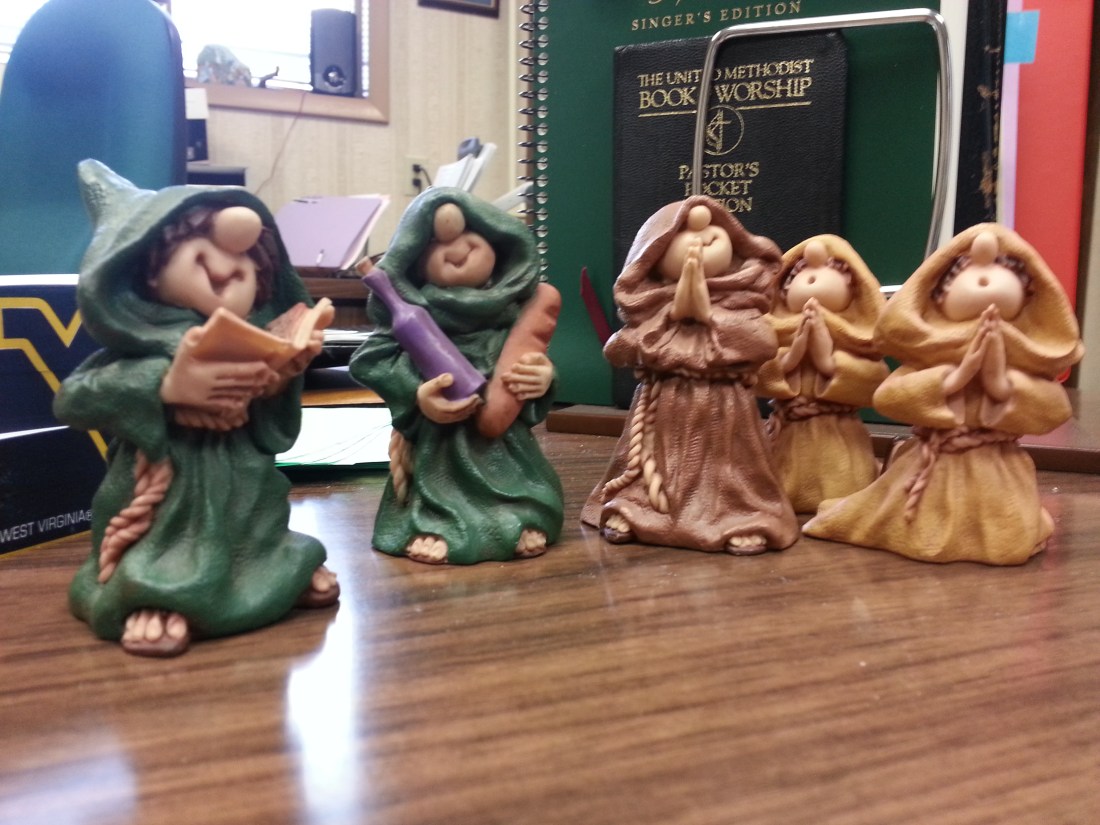
piece and then offers it to us, broken, just as we are broken. Does the fact that we all receive just a part of this offering destroy the unity of the symbol of Christ’s Body that is presented in the Eucharist? No.

And neither does the brokenness that embodies the congregations called United Methodist. We will continue to receive the grace of Jesus and offer that grace to others just as scandalously as it has been given to me, to you, to all who have received Christ.

[1] I think it is important to note that our current Discipline prohibits our clergy from participating in ceremonies that celebrate same-sex unions or holding such ceremonies in our churches. However, this prohibition says nothing of weddings and marriages between same-sex couples. Some may think this is “splitting hairs,” however, many believe that there are great differences between the two.

[2] http://www.umc.org/news-and-media/15-united-methodist-clergy-candidates-come-out-as-gay1

[3] http://revjameshowell.blogspot.com/2016/04/our-united-methodist-book-of-discipline.html

[4] “Catholic Spirit” by Rev. John Wesley as found in John Wesley’s Sermons, An Anthology edited by Albert C. Outler and Richard P. Heitzenrater, page 301.

[5] Wesley and the People Called Methodist, Richard P. Heitzenrater, proof copy, Abingdon Press, 1993, page 289.

[6] Ibid, pp. 296-297.


A Response to “Unsettled Christianity” and “with Bishops abandoning the Discipline, are we a church?”

Please read the above article here before reading my response. Thanks!!

Joel Watts, once more you have given us a well written, concise article. You have given me much to think about and I believe, with a lot of hope and prayer, that we share more common ground than we do disagreements.

I agree that we need discipline in order to truly be a church. However, I don’t think the action of our bishops – or inaction for that matter – destroys our standing under the headship of Christ. How many times historically would this have taken place, if not just in the UM tradition then the Church universal? If the efficacy of sacraments are not dependent upon the “holiness” of the presider then how could we possibly say that the entire existence of an ecclesiological body such as the United Methodist Church lays solely upon the actions of its episcopal leaders?

At the same time, we are at a crossroads in our church. There is danger in the disorder we are facing. The fact that we live in a 24/7 news cycle world and that people use that cycle to proclaim what they believe makes our four year system of affirming and changing our Discipline seem rather quaint, if not almost useless. Even our conversations in and among blogs shows how quickly things develop. Yet, if you are a United Methodist, you must wait four years for any “real” change to take place. It reminds me of the old joke, “How many United Methodists does it take to change a light bulb?” “Doesn’t matter how many but you can count on it taking a full quadrennium to happen.”

I am not excusing misbehavior by our bishops, elders or any other member of our denomination. I do, however, understand how frustration can lead to demonstration. It was quite possibly frustration, I believe, that led Rev. Wesley to send Asbury and Coke to these United States (ok, they weren’t that yet) to do everything a bishop would normally do, but not be a bishop. I know Rev. Wesley didn’t wink and nod when he did this but it sure didn’t Coke and Asbury long to really fix the problem.

So, I think we might both agree that our Discipline needs fixed in such a way that we can actually be church in the 21st Century. What would that look like? Is that even possible? I don’t know. I just know that the times between Councils and Conferences, etc. throughout church history has become shorter and shorter. It used to take much longer to do theology and even cause schisms and reformations. Now we can do these within days.

Secondly, I disagree with starting our theology with ecclesiology. You say, “Christ is head of the Church; the Spirit dwells in the Church; we (who) are saved (are) in the Church. Our ecclesiology will reflect our views of those other important doctrines.” I would say, “Christ is the head of the Church and the Host at Communion and every other part of our theology should flow from there.” Ecclesiology must be secondary to Christology simply because of the chicken/egg question. Can we say, “There is no Christ without the Church?” Maybe in some places, but certainly not in United Methodism. I believe we would say “There is no Church without Christ” instead.

You are welcome to disagree with the part of that statement concerning Christ presiding at the Table. I’m a practical kind of guy and it makes things easier for me to think about Jesus at the Table whenever I think theology. If it doesn’t fit there, well, maybe I am thinking something wrong.

Truly, I’m not the most theologically minded writer you will find with a blog. I’m a Christian pastor and an ordained Elder in the UMC and my theology grows out of that practice. I tend to forget a lot of the great history I have learned over the years or perhaps I package that history differently in my mind now after almost thirty years in pastoral ministry. I do appreciate how you are pushing us to take ourselves, what we stand for and the very way we encapsulate those doctrines and polity with more seriousness than it would appear we are doing. Please keep up that work!

Or maybe we should just join together and try to get everyone to accept the Nicene Creed and nothing else as what we need to share in order to be a church in this day and age. Perhaps the time of overabundance in information will is forcing us back to a time when a lack of information made us keep things simple.

Hmmm…is that a new thought?