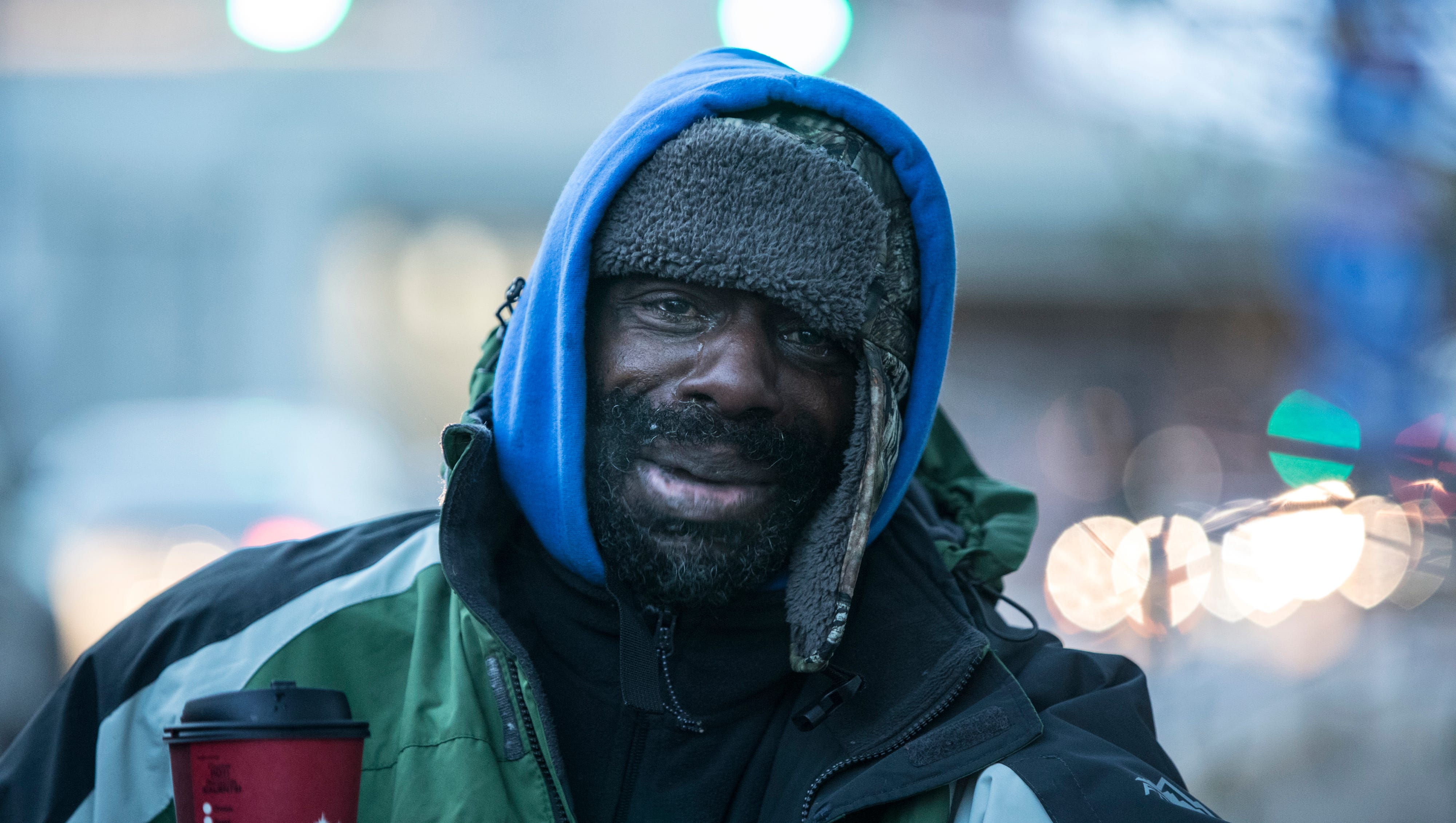
shouting and silence – a sermon

There are several accounts in the New Testament of Jesus triumphal entry into Jerusalem. This morning. I read to you From Luke, chapter 19, verses 29 through 40, which differs in some ways from some of the other accounts and is the same in some ways. But please hear these words.

When Jesus had come near Bethphage in Bethany, at the place called the Mount of Olives, he sent two of his disciples saying, go into the village ahead of you, and as you enter it you will find tied there a colt that has never been ridden. Untie it and bring it here. If anyone asks you, why are you untying it? Just say, the Lord needs it. So those who were sent departed and found it just as he told them.

Sermon on April 13, 2025 – shouting and silence

As they were untying the colt, its owners asked them, why are you untying the colt? They said, the Lord needs it. Then they brought it to Jesus. And after throwing their cloaks on the colt, they set Jesus on it. As he rode along, people kept spreading their cloaks on the road.

Now, as he was approaching the path down from the Mount of Olives, the whole multitude of disciples began to praise God joyfully. With a loud Voice for all the deeds of power that they had seen, saying, blessed is the king who comes in the name of the Lord, Peace in heaven and glory in the highest heaven.

Some of the Pharisees in the crowd said to Jesus, teacher, order your disciples to stop.

He answered, I tell you, if these were silent, the stones would shout out, this is the word of God for us, the people of God.

Mark Twain, the author, famously said one time, it’s not the parts of the Bible that I don’t understand that bother me. It’s the parts that I do understand that trouble me the most. Now, I’m not here to agree or disagree with what someone from a couple centuries might have said. However, I can say that I think living a life close to the one who makes the words of the Bible come alive often puts us in very uncomfortable places. Okay?

Living close to Jesus often puts us in uncomfortable places, even when we read the words about him. On this Palm Sunday, when we’re looking at everything between shouting and silence, I want to offer at least a couple of questions that easily, easily this passage leaves hanging around for us in life.

First of all, how did they know to shout praise and honor to a king?

How did they know? How did they know that this was what they were supposed to do? Was it the miracles? Was it the feeding of the five thousand and all the leftovers? Was it the people who were.

Who were blind that he made see again?

Was it the miracles? Was it those who had demons that were cast out from them?

Was it the miracles that made them shout? I don’t know if it was the miracles or not, but that question does kind of linger. How did they know to shout at this one, to throw down their cloaks for this colt to ride upon?

Was it the teaching, maybe the parables? The. The Good Samaritan, the lost sheep, the lost coin, the lost son, that stubborn fig tree who wouldn’t produce figs?

Was it the parables?

Was it the other teachings, the Sermon on the Mount or the Sermon on the level place, depending on where you read about it? Was it the big turnaround in that little guy named Zacchaeus?

Was it the teaching of the man named Jesus that made them shout and welcome a king? I mean, it was risky to do this kind of thing. You realize that, don’t you? I mean, standing where they were at that time, they were surrounded by an occupying army. An occupying kingdom watched over them, and they shouted out for their king.

This was risky stuff. It wasn’t as if they had to prove that they were citizens of this country and take risks or anything. They lived there, but they were in danger because they shouted out.

It was risky to welcome a king into the kind of life they were living. Risky indeed. So my first question is, how? How did they know to shout for the king?

And then there’s the second question. Maybe I was just in a kind of questioning mood this week or whatever. I don’t know. A question that I admit when you first hear it, sounds almost absurd as the first. But I’ve lived now in a world divided long enough.

I’ve lived in a world of haves and have nots. A world of people accepted and of people rejected. A world where some rule and some are the ruled. I’ve lived in this world long enough to come to my second question with a lot of honesty, and that’s this one. What if the Pharisees.

There was a few Pharisees, not all of them, but a few of them were told here. What if those few Pharisees who spoke out and said, everyone should be quieted here, what if they were actually right?

What if the crowd really did need to be silenced before something bad happened?

And yes, terrible things may have happened, may well have happened sometimes, you know, sometimes a crowd can bring out the worst of those who are supposed to be keeping order among people.

And those who are keeping order have to react or the crowd gets out of hand. In those days, it might have been with shields and spears and swords.

In our day, maybe it’s tear gas or water hoses or dogs or rubber bullets.

How can we be absolutely certain that that group of Pharisees were not just looking out for the good of the whole people, all their people? They weren’t just trying. They were just trying to protect folks.

What if they were right?

I’ve seen it happen.

I’ve had it happen.

I’ve said one thing in a sermon or message or in something I’ve written or said one thing in public.

Some in the crowd walk away from their church, and then I hear it.

You should have kept quiet, preacher.

You shouldn’t talk about that ever again. Pastor.

Don’t shout that out anymore.

There have been times in my life and in my ministry where I’ve heard the words of those who say, you better get it quieted down.

And I do. I do.

Because how do I know this telling me to be quiet might be right in between shouting and silence, in between those times when people feel compelled by the moment and the spirit to cry out, and the times when people are not certain enough to know if what is happening won’t just make matters somehow worse.

In between those two extremes is. Well, at least in this story we read today. In between those two extremes is the man God, Jesus riding on a colt. Yes, Jesus is silent.

He’s not crying out. And yes, Jesus is complicit. He doesn’t quiet the crowd either.

He just sits there and lets all the wrestling and the wrangling about what’s the right thing to do here and what’s the wrong thing to do. All the shouting and the silence making.

He just lets it all go on around him.

See, I had those questions about this passage, but there’s one thing I do not question at all, and that is why Jesus did not participate in the shouting or in the silencing.

That’s because Jesus knew the way of the cross was looming before him. He knew he was getting ready to die for shouters and silencers alike.

He knew Jesus. He knew he would bear the weight of all of their. Of all of my.

Of all of your struggles to know the right way to go. Is it shouting or is it silence?

My siblings. I’ve taken moments of silence as a pastor held back after hearing warnings that to speak might cause trouble.

I’ve also shouted for justice, more than my fair share, I think, and prayed for God’s presence to reign in a messy world often devoid of the love that is abundant in Jesus Christ, my Lord. And I know you wrestle with when to do these two things too, don’t you? Don’t you?

But every time, there’s only one thing I cling to.

I cling to the cross of Christ, where I know there is someone who knows both my passionate heart that must shout at times.

And where I’m also known as the one who can be silent, not really because of warnings or fear, but because I truly believe that that one on the cross in his silent state can sometimes shout louder than I’m ever able to shout if I just give him the chance.

How did they know?

And what if they were right?

Just two questions that kind of lived there in between shouting and silence.

But they also live with each who wonders.

There also lives with each who wonders a cross of redemption. A king filled with love. An abundance of grace for all of us. For all of us who shout.

For all of us who are silent. For all of us who struggle with everything in between.

Amen.

righteousness and mercy – a sermon

I invite you to join me in prayer. Would you pray for me even as I pray for us all?

Lord, it is not by might, it is not by power, and it most certainly is not by the cleverness of this human’s imagination that your word is read or proclaimed. But it is by your spirit. So may that spirit come now. May it rest upon each of us. May it work through all of us that we find ourselves in the presence of the Living Word, Christ Jesus our Lord.

Amen.

From Luke, chapter 19, verses 1 through 10.

Jesus entered Jericho and was passing through it. A man there named Zacchaeus. He was a chief tax collector and was rich. He was trying to see who Jesus was, but on account of the crowd, he could not because he was short in stature. So he ran ahead and climbed a sycamore tree to see him, because Jesus was going to pass that way.

When Jesus came to the place, he looked up and said to him, Zacchaeus, hurry and come down, for I must stay at your house today. So he hurried down and was happy to welcome him. All who saw it began to grumble and said, he’s gone to be the guest of a sinner. Zacchaeus stood there and said to the Lord, look, half my possessions, Lord, I will give to the poor. And if I have defrauded anyone of anything, I will pay back four times as much.

Then Jesus said to him, today, salvation has come to this house because he too is a son of Abraham. For the son of man came to seek out and to save the lost. This is the word of God for us, the people of God.

Thanks be to God indeed. You know, folks, over the past several weeks as we’ve gone through this Lenten series entitled Everything in Between, we’ve been wrestling a lot and digging deeper into a lot of parables. You know, we had the Good Samaritan, we had the parable of the barren fig tree. We had a parable about lost and found sheep and a shepherd risking everything. And the one week here in Lent that we didn’t have a parable, we had to deal with the family drama between Mary and Martha as they tried to figure out who was doing the better thing.

So to tell you the truth, I was looking forward to dealing with some very straightforward up front story from the life of Jesus this week. Something concrete. Jesus walking through a town, a tree, crowds, something without all that having to dig into parables and find all the meaning that’s in those parables. Something besides all the family drama that we’ve had to deal with.

Used by permission of A Sanctified Art

And then, of course, we get to Zacchaeus.

Zacchaeus. The name Zacchaeus means righteous or pure. Did you know that righteous or pure is what this man is named? I mean, really, a Roman tax collector named that?

I mean, let’s be real. What’s the one word that is literally connected with tax collector in the gospel? With the conjunction and tax collectors and sinners. Yeah, tax collectors and sinners, exactly. And this one is named innocent and pure.

Not much of a break there. And as I studied a little deeper into this parable, I discovered that there were some interesting problems dealing with the original language of the parable. The original Greek is not so clear as to when it was that Zacchaeus started all this charitable giving that he was doing. Now, I don’t want to get. I don’t want to get lost in the weeds here or the thorns or go climbing up my own tree here and end up having nobody see or hear what I’ve got to say.

But suffice it to say, Zacchaeus could have been doing this giving and repaying for quite a while. Could have, just because of the words that are used in the original language. But what we do know for sure is that Zacchaeus went public with it after meeting Jesus. He declares what he’s doing and will do, and that changes a lot.

But still, as I was preparing for this week, I had to dig down into the roots of those words. Like that gardener dug down into that fig tree. I had to search like I was looking for a lost sheep in the wilderness. I began thinking, you know what? This might as well been a parable.

There was no break here.

And then, of course, there’s Jesus.

Jesus, there he goes and singles out this tax collector from the crowd. Zacchaeus, the man too short to see and too despised to be seen.

Zacchaeus, hiding in a sycamore tree, a man whose name was, to put it as mildly as you can, just a touch at odds with his reputation.

A man everyone knew was making money by taking money.

I tell you what, this series of everything in between really has drawn our eyes to the dichotomies that we can find in the world and even within scripture itself, dichotomies sometimes that we love to see. I mean, things like righteousness, we like that we can look at someone or something and say, that’s righteous. We know that’s good. It may even be trouble, but it’s good trouble, so we know that’s good. Righteousness, something we can look at and define.

And mercy, we like that, too, because we want to show mercy to those who deserve it, right? I mean, someone needs to deserve mercy. If you don’t believe me, just ask any old court judge. Or you can ask a young one, too. We’ve only got old ones in here today, though.

I think we like to keep our categories like righteousness and mercy separated.

But Jesus, well, Jesus doesn’t care all that much for our categories.

Jesus doesn’t see like we do. Jesus doesn’t even look in the same places we do for what needs to be seen in the story. Jesus sees: Zacchaeus, sees him up in the tree, hiding.

But Jesus sees him not as a tax collector, but as a human being. Jesus sees Zacchaeus as a child of Abraham.

And then Jesus just invites himself right into that person’s house, into the mess that is a tax collector’s life, into that space, that space that’s seemingly miles wide between righteousness and mercy. That’s where Jesus goes.

And that’s just it, isn’t it? That space between – that awkward, uncomfortable space where we don’t know what to do, the space where we’re not sure if we should be angry, judgmental, frustrated, or just compassionate.

That space where we must wrestle with verbs, when it comes to how we act.

A space where we must wrestle with names and labels and all those things. That space, that uncomfortable space where we must deal with, well, people.

We want it to be nice and easy one way or the other. Righteousness, mercy. Are they righteous? Do they deserve mercy?

And Jesus?

Well, Jesus fills that space.

Jesus doesn’t choose. Jesus just invites himself in. He stops at a tree and looks up and says, hey, you, I’m going to your house today.

Here’s Jesus looking where we don’t even want to look.

And in that moment, in that space filled with Jesus, something happens, something transformative. Zacchaeus, this person whose life was only known as the one who took from others, becomes and shows the whole community that everything is being made whole, everything will be made right.

Zacchaeus wants salvation, connection, community, not as a reward for being good, but as a gift freely given.

And Zacchaeus gets it. The community gets it. And that, my friends, is good news. Not just good news, but the good news. That’s the Gospel.

Jesus doesn’t just offer mercy to the undeserving and commend those who are righteous.

Jesus fills up the space in between.

Jesus fills up the space that is unfillable and even uncomfortable for us to go there.

Jesus brings together that which is broken, you know? Here, in just a few moments, Jesus will offer himself to you again in the act of taking apart of the broken body of Christ, we will be brought together in community.

It doesn’t seem to make sense, does it? In brokenness, there’s community.

But that’s what Jesus does. Jesus fills the spaces between those things that we have trouble filling.

Salvation, my friend, my siblings, salvation is offered to you today.

Come, come on down and let Jesus go to your house today. Amen. Amen.

As you leave this place, may you find God in every messy middle. May you know that the world is bigger than any two sides. May you trust that you are made in the image of God. Therefore, you contain multitudes. So may you move through the world with an open heart, with a curious mind, and with the confidence that you do not go alone.

God is with you in the mountains, in the valleys, and everywhere in between. Believe this good news and go in peace. Amen. Amen.

Again?

I don’t know where to start. Part of me has hoped beyond hope that somehow we would have found a solution to the problem of mass shootings in the United States. I’m wrong. And I am pretty well convinced that I will remain wrong until the most profitable field in medicine is Mental Health.

Oh…don’t get me wrong. I do not blame ALL shootings on people with mental health issues. Nah. That’s not what I mean. I just mean that until mental health becomes a priority for us in the United States – and let’s be honest, the only real priorities in the United States are profitable priorities – then we will not even be able to carry on the conversations that we really need to have in order to fix this problem.

We just are not sane enough.

Why do I say that, you ask? Well, it happened in 1999 in Columbine and all of our thoughts and prayers and energy went into changing nothing. It happened in 2012 in Newton and all of our thoughts, prayers, energy, and ranting on social media went forward to change nothing. It happened in 2018 at Stoneman Douglas High School and all of our thoughts, prayers, speeches, energy, and ranting/raving on social media went forward to change nothing. Does doing the same thing over and over again and expecting different results sound sane to you?

We are not sane enough to have conversations about people killing people that lead to changes in laws that will protect life because our minds are clouded by the insanity that our rights may somehow be trampled. We are not sane enough to have conversations about people killing children because we are so entrenched in our own “belief systems” that we cannot even hear someone else without making them into a villain

We are not sane enough. And until we make mental wellness the most profitable branch of medicine – Nothing. Will. Change.

Am I speaking in hyperbole, being just a bit sarcastic, or attempting to be prophetic? I don’t know yet. But after this next batch of sad, needless funerals take place, if nothing changes, AGAIN, then we will all know.

So, today, I did what I do when I am forced to think about 19 dead elementary school children and their families and community trying to comes to grips with the loss. I prayed. And I worked on my own mental health, because we must all be a little bit insane since this is still happening.

I also share with you the prayer that I have prayed all day in hopes it will bring you to a point of lamenting both the violence and the lack of mental health we face as a society. Enjoy the song. Cry if you can.

Prayer

On the sidewalk, he talked to many people

                But they were not to be seen.

As he approached me, I wondered,

                Does my “here” exist for him?

But he spoke to me as to those other –

so I am real,

I guess.

And the King of Austria introduced himself

To me

And me to his own cloud of witnesses.

People who were there for him if not for anyone else.

He talked to me and to them in turns.

                Seeking help and advice and counsel from us all.

At times I could not keep up, but as time went on

                It was no longer strange, or weird, or uncomfortable

                Instead, it was what it was:

Prayer.

                I’ve been asked to explain it, teach it even.

                                But had I ever really lived like someone whose whole life was prayer?

                I held the door open a little longer than usual as he/they left

                Just to be certain they all went with him.

                But when the curtain, the door closed

                                Between us

                                It might just have been that

                                                One or two

                                Stuck around

                Just waiting for me to pray.

Lent 2020 – A Prayer

ashwednesdayLord, as your children, we gathered together and received the reminder of being dust and returning to dust. Do you remember the sight of your children with the smudges of ash on their foreheads? Do you recall the fervor that we entered into a season of turning around, being ourselves in your presence, and promising changes in our lives for good? Do you remember, Lord.

We do. We remember. Many of us can still feel the grit on the ash falling upon our eyelashes. We can recall blinking back tears brought by the invasion of a mark from you that we were freely accepting. We can remember looking at one another – side by side – and wondering if the cross we wore was as neat and tidy as the one we saw on our sister or brother. We remember.

But now we are a lifetime away from a night that was only a fortnight ago. And our eyes blink again, and we feel the grit of an invisible invader bearing down upon us. We long to travel together into this unknown time of change and growth, but our love for your commandment to love one another forces us to chose to be on our own. We wish we could covet the sight of a dirty forehead, of a hundred dirty foreheads of your children together with us.

In this season of Lent 2020, our vision is not perfect and our way is completely unknown. Like the children of Abraham, we find ourselves wandering in a wilderness full of the knowledge of your mercy and shuddering with confidence in your wisdom. It is doubtful, Lord, that we will forget these days of being apart. We pray that we will use them to turn both to you and to our neighbor who may need more than we do. You gave us this season, and the world gave us a reason to lean into the faith for which we lowered our foreheads for a map.

This cross we carry in Lent 2020, is one that we know that you have already borne. These steps we take, we know are on a road you have already walked.

Give us the courage to look to the very hills around us for our help. May they remind us that our help comes from the one who made not just the hills, but the earth, the heavens, and all of creation. You, O God, are our help.

wpid-PaperArtist_2014-04-01_09-52-38.jpeg

And when we step forth from this journey – crossing whatever river lies ahead us – may we do so with the joy of those who know the presence of Christ’s victory over death. May we step from this journey to celebrate with one another the calling you have placed upon us to be in this time, and every time those who are clothed with compassion, kindness, humility, meekness, and patience. May we bear one another with love and may we see your very face in the ones we seek to love.

We pray this as those whose only hope is your grace, your mercy, and your faithfulness. We pray as your children who walk through Lent to be changed.

Amen.